
Doing Business in Morocco 2025
Unlocking Trade, Innovation & Investment Between Southern Africa and Morocco
Host City: Casablanca, Morocco
Dates: 23rd July – 26th July 2025
A flagship ATIC initiative, Doing Business in Morocco 2025 is a continental platform designed to catalyse trade partnerships, business expansions, and investment flows between Morocco and the Southern African region.
Morocco is fast emerging as a strategic gateway to Europe, North Africa, and the Arab world. With its advanced infrastructure, bold reforms, and business-friendly policies, it presents an exceptional opportunity for businesses and investors in the Southern African region.
Our program convenes policymakers, private sector leaders, trade experts, and investors to forge practical collaborations and unlock new value chains across key sectors: manufacturing, energy, agriculture, logistics, mining, automotive, digital economy, and more.
Join us in Rabat as we build bridges between Southern Africa and Morocco for a future of shared growth and continental prosperity.
Event Introduction
Doing Business in Morocco 2025 is more than a business forum, a continental convergence of leadership, ideas, and opportunity.
Informed by Morocco’s New Development Model and the African Continental Free Trade Area (AfCFTA), this program seeks to strengthen South-North Africa economic ties by presenting actionable insights, curated B2B engagements, policy briefings, and sector-specific showcases.
Participants will gain direct exposure to Morocco’s economic transformation, investment climate, and sectoral opportunities, while Southern African delegates will present value propositions, strategic projects, and export-ready businesses.
This is where cross-border trade gains momentum, and a new Africa-Morocco investment corridor takes shape.
The Power of Sport and Commerce: Aligned with WAFCON 2025
Doing Business in Morocco 2025 is aligned with one of Africa’s most anticipated sporting milestones, the Women’s Africa Cup of Nations (WAFCON), the tournament will be taking place in the Kingdom of Morocco from 05th June – 26th July 2025.
Our business program will unfold in Casablanca from 23rd to 26th July, and will culminate with the WAFCON Finale at the Olympic Stadium in Rabat on Saturday, 26th July 2025, one hour from Casablanca.
This alignment is no coincidence.
Across the continent, sport is emerging as a vital engine of diplomacy, development, and commerce. Football, in particular, unites Africans beyond language and borders, generating social capital and continental pride. By aligning our program with WAFCON 2025, we affirm the deep connection between economic ambition and cultural celebration.
Delegates will have the opportunity to experience the energy of the WAFCON finale live, as we honour the women elevating African football on a global stage.
We will conclude our business engagements in celebration of excellence, unity, and the unshakable spirit that defines both sport and enterprise in Africa.
Together we trade. Together we build. Together we rise.

ABOUT ATIC
Curating Trade and Investment Platforms for
Nation-Building and Continental Progress

The Africa Trade and Investment Council (ATIC) is dedicated to advancing Africa’s development through advocacy, strategic investments, regional trade facilitation, and sector-specific collaboration. Through 12 specialised working groups, including health, infrastructure, sports, tourism, digital economy, and finance, ATIC mobilises cross-border expertise and partnerships to build resilient economies and inclusive, sustainable societies.
Our Mandate
ATIC is a continent-wide organisation committed to unlocking Africa’s full development potential. Guided by a long-term vision for prosperity, ATIC’s mandate is anchored on three foundational pillars: We combine capital deployment with policy foresight and technical expertise to drive transformative initiatives that are scalable, sustainable, and foundational to Africa’s longterm development architecture. ATIC champions homegrown solutions that meet global standards while reinforcing local resilience, institutional renewal, and sovereign capacity.
Our strategy operates in unison with assertive private sector advocacy, shaping enabling policy environments, advancing institutional reform, and deepening continental integration. ATIC is committed to creating enduring ecosystems that empower current and future generations. ATIC Role in Hosting: Doing Business in Morocco 2025 ATIC curates platforms, such as Doing Business in Morocco 2025, to align national priorities with regional ambitions. Rooted in the belief that nation-building begins with structured partnerships, we bring together public and private actors to:
- Co-design mutually beneficial trade and
investment frameworks - Unlock catalytic capital and market access
for African enterprises - Build long-term cooperation through
economic diplomacy - Drive conversations that yield measurable
transformation
Serving as a launchpad for African-led progress, a structured response to the New Development Model of His Majesty King Mohammed VI, and a testament to Africa’s readiness to lead its transformation.
In partnership with legacy minded institutions like Sanlam, ATIC continues to bridge regional gaps, amplify African potential, and cultivate ecosystems that deliver prosperity with purpose.

ABOUT SANLAM
Curating Trade and Investment Platforms for
Nation-Building and Continental Progress
As the official partner of Doing Business in Morocco 2025, Sanlam brings over a century of experience to this platform, enabling financial inclusion, security, and longterm prosperity across Africa. Headquartered in South Africa, we stand at the forefront of transforming Africa’s economic landscape through solutions formulated to the continent’s specific goals. Sanlam’s partnership in this initiative reflects its deep commitment to Africa’s development agenda and its understanding that sustainable progress requires more than investment; it requires integration, collaboration, and alignment. Through this collaboration with ATIC, Sanlam is reaffirming its long-held conviction that economic empowerment, regional trade, and local innovation are the foundation of African prosperity.
- As the program partners, Sanlam contributes: Strategic insight into Africa’s key growth sectors
- Investor confidence and financial instruments to support bilateral ventures
- And a proven legacy of working alongside governments, businesses, and communities to unlock inclusive development.
With its growing presence in Morocco and across North Africa, Sanlam is uniquely positioned to facilitate cross border investment linkages between Southern Africa and the Kingdom of Morocco, particularly in insurance, asset management, infrastructure financing, and ESGaligned development.
Sanlam’s involvement ensures that this program is a moment of engagement, a launchpad for action, impact, and enduring continental advancement.
STRATEGIC ALIGNMENT
WITH MOROCCO’S VISION 2035
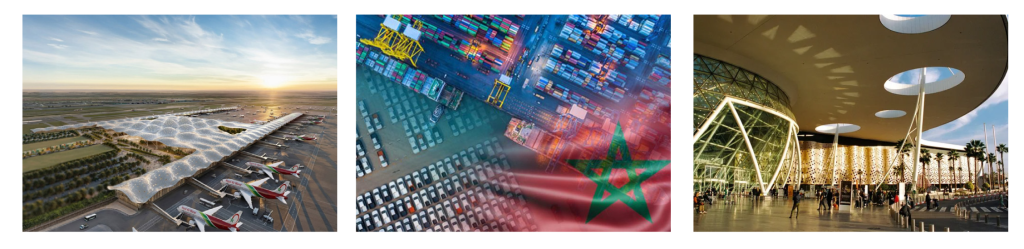
ATIC, in partnership with Sanlam, hosts Doing Business in Morocco 2025, a 3-day program purposefully aligned with the Kingdom of Morocco’s New Development Model (NDM), the national roadmap launched under the stewardship of His Majesty King Mohammed VI. The NDM sets a transformative trajectory for Morocco to become:
- A more prosperous,skilled, inclusive, and sustainable society
- A nation equipped to lead in emerging sectors and tackle global challenges
- A country of widespread opportunity, where progress is accessible and equitable.
This long-term vision, anchored in the goals of the NDM, is central to Morocco’s ongoing policy and investment strategies across various sectors, including renewable energy, digital transformation, agritech, and industrial innovation.
The business program, as part of ATIC and Sanlam’s broader continental engagement, responds directly to this national vision. It convenes high-level stakeholders across Southern Africa and Morocco to co-develop pathways for investment, skills transfer, and cross-border industrial growth, thereby contributing to Morocco’s vision of becoming a model of Inclusive and Sustainable Industrial Development (ISID) across the continent.
SIGNIFICANT SECTORS OF GROWTH
In The Kingdom of Morocco
ATIC recognises the imperative to connect Southern Africa’s economic contributing factors with Morocco’s emerging and future-defining sectors. Morocco’s development agenda is rooted in its New Development Model 2021, supported by Vision 2030 and sector specific strategies extending into 2036, reflecting an unwavering commitment to inclusive growth, resilience, and regional collaboration.
We offer a sector-by-sector outlook to illuminate the investment landscape, co-creation potential, and opportunities for shared African advancement.
Doing Business in Morocco is a practical expression of this national vision. By creating a platform for investment, trade cooperation, and public-private dialogue, this initiative directly contributes to the NDM’s focus on:
- Strengthening strategicsectors like renewable energy, agritech, and the digital economy;
- Enhancing continental value chain integration
- And amplifying South South cooperation through structured, results-driven engagements.
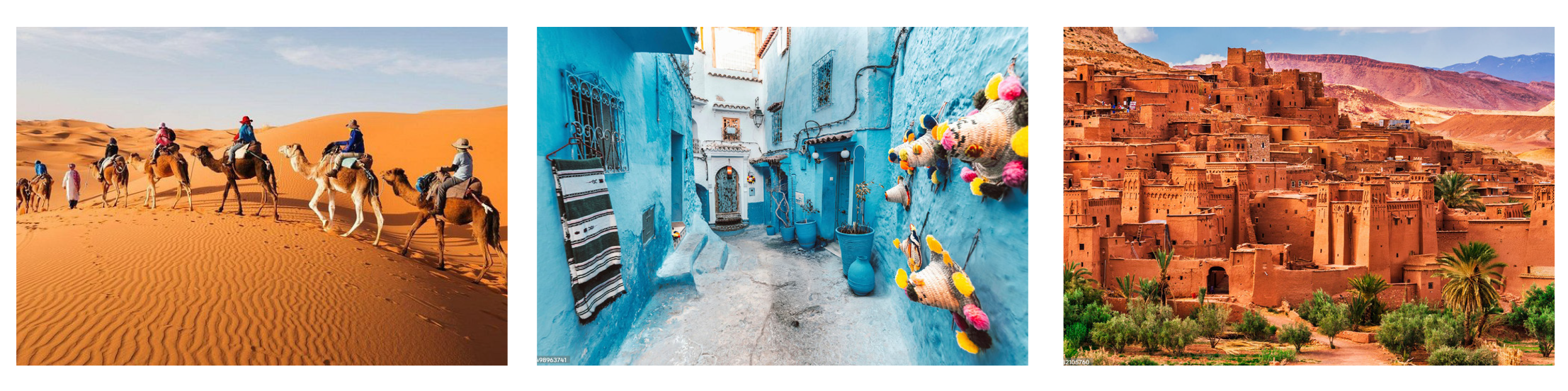
01. Tourism & Sports for Continental Collaboration
Harnessing Morocco’s Cultural Capital and AFCON 2025 to Drive Trade, Investment, and Regional Integration.
Tourism and sports are not merely sectors of entertainment or leisure—they are powerful economic engines and vehicles for diplomacy, cultural exchange, and brand elevation. ATIC recognises the strategic value of these sectors in advancing bilateral investment, unlocking intra-African trade, and strengthening regional partnerships.
As Morocco prepares to host the 2025 Africa Cup of Nations (AFCON), the Kingdom is activating a national platform that showcases its world-class infrastructure, tourism assets, and national development agenda to a continental and global audience through sport.
Tourism as an Investment-Ready Sector
Tourism accounts for approximately 7.1% of Morocco’s GDP, employing over 500,000 people and contributing significantly to foreign exchange reserves. The Moroccan Agency for Tourism Development (SMIT) and the Ministry of Tourism are implementing Vision 2030, a strategy that focuses on:
- Diversifying Morocco’s tourism offerings (e.g., eco-tourism, cultural heritage, and luxury tourism)
- Attracting private capital for destination development in key zones like Casablanca, Marrakesh, Taghazout, Saïdia, and Dakhla
- Improving infrastructure and connectivity to facilitate visitor access and investor logistics
- Promoting sustainable tourism as a pillar of the green economy
The Tourism excursion on Day 3 will provide delegates with an immersive understanding of Morocco’s investment-ready destinations, sector incentives, and high-potential partnership opportunities. Southern African operators, infrastructure developers, and tourism tech innovators are well-positioned to expand their footprint into the Moroccan market through joint ventures, hotel development, transport solutions, and destination marketing.
Sports as a Driver of Soft Power and Regional Branding
AFCON 2025 presents an unprecedented opportunity to leverage sport as a continental integration platform. Morocco’s hosting of the tournament reflects its growing stature as a pan- African sporting hub, with world-class stadiums, training facilities, and logistics readiness. Beyond the games, sport diplomacy will serve as a bridge for:
- Public-private partnerships in sports infrastructure and services
- Youth development initiatives in sports education and health
- Regional collaboration on sports tourism and media broadcasting
- Branding and showcasing of Southern African enterprises within the AFCON value chain
ATIC aims to:
- Promote regional branding for Southern African companies
- Facilitate cross-sector economic linkages
- between sport, tourism, media, and investment
- Establish long-term partnerships around sports development, logistics, merchandising, and talent mobility
Impact
The inclusion of tourism and sport within this program reflects ATIC’s commitment to a holistic economic development agenda—one that values not only capital and infrastructure, but also culture, identity, and people. These sectors are key entry points for inclusive growth, youth engagement, and regional identity-building. By integrating sports and tourism through the launchpad of Doing Business in Morocco platform, ATIC and Sanlam create a powerful convergence point between cultural diplomacy and commercial engagement, ensuring that AFCON 2025 is both a continental celebration and a cornerstone for transformative African collaboration.
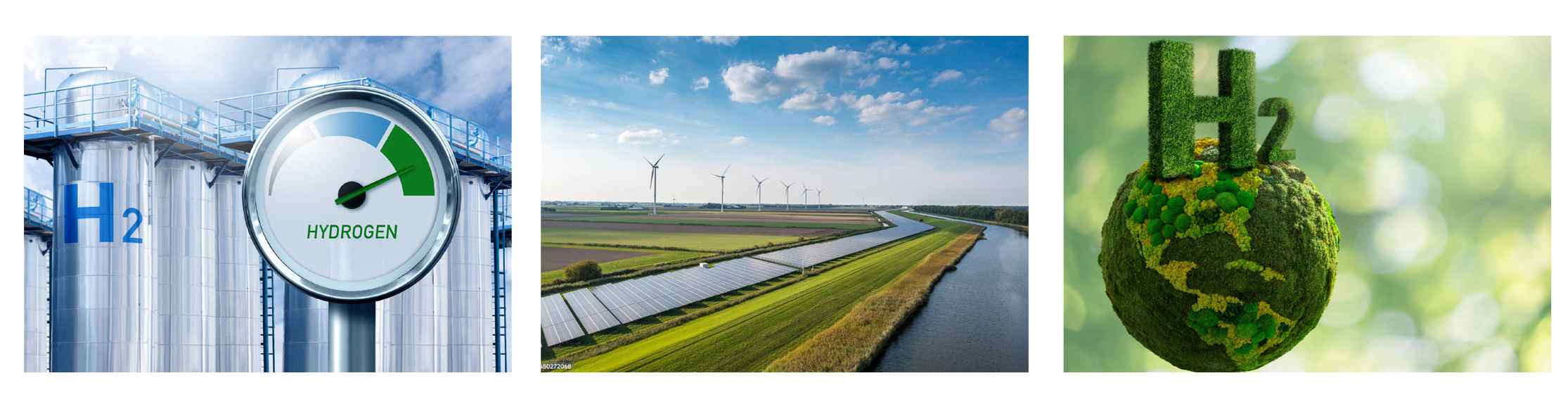
02. Renewable Energy & Green Hydrogen
Morocco is globally recognised as a renewable energy pioneer, with abundant solar (2,963 hours/year in Ouarzazate) and wind (6,000 MW potential) resources. It has long prioritised energy independence, becoming the first country in MENA to host utility-scale CSP (Concentrated Solar Power) plants. Its location between Europe and Sub-Saharan Africa positions Morocco as a future green energy exporter.
Current Status
- As of 2023, 40% of installed capacity is from renewable sources.
- Target by 2030: 52% renewable energy share in the national electricity mix.
- The Green Hydrogen Roadmap (2021) aims to position Morocco as one of the top 10 global exporters of green hydrogen.
Flagship projects include:
- Noor Ouarzazate Complex (580 MW solar CSP & PV)
- Amun Project – a $10 billion green ammonia/ hydrogen initiative in southern Morocco.
- Government strategy: National Energy Strategy 2030, aligned with Morocco’s Climate Action Plan, encourages international joint ventures, particularly in electrolyser manufacturing, desalination integration, and hydrogen value chains.
03. Automotive Manufacturing
Morocco has evolved into a continental industrial hub, particularly in automotive assembly, benefiting from its Industrial Acceleration Plan (IAP) 2021–2026 and free trade access to the EU and US. Its proximity to Europe and modern infrastructure has made it a preferred base for Tier 1 suppliers.
Current Status
- Automotive exports exceeded USD 12.6 billion in 2023.
- Over 250 companies operate in automotive components.
- Morocco is Africa’s largest car producer, with an annual capacity of 700,000 vehicles. By 2030:
- Morocco targets production of 1 million vehicles/year.
- Electromobility (EV) infrastructure will be fully integrated via IAP 2.0.
- Investors from Southern Africa can tap into: Supplier chains in battery tech, lightweight materials, and electric vehicle (EV) assembly.

04. Agritech & Sustainable Agriculture
Agriculture employs over 30% of Morocco’s workforce. The sector has shifted from subsistence farming to high yield, exportfocused agribusiness. The Generation Green 2020–2030 roadmap aims to modernise food systems and integrate climate smart farming.
Current Status
- Morocco exported USD 4.2 billion in agriproducts in 2023 (led by citrus, olive oil, tomatoes).
By 2030:
- Double agricultural GDP to USD 22 billion.
- Create 350,000 new jobs in rural areas.
- Upgrade 1 million hectares with smart
irrigation.
- Tangible opportunities exist in: Agri-fintech, seed genetics, vertical farming, and cold chain logistics.
- Morocco is deploying Agropoles in regions like Berkane and Meknès to host agritech innovation clusters.
- Open investment sectors include desert agriculture, sustainable fisheries, and biofertiliser production.
05. Digital Economy & Technology
Agriculture employs over 30% of Morocco’s workforce. The sector has shifted from subsistence farming to high-yield, exportfocused agribusiness. The Generation Green 2020–2030 roadmap aims to modernise food systems and integrate climate smart farming.
Current Status
- Morocco exported USD 4.2 billion in agriproducts in 2023 (led by citrus, olive oil, tomatoes).
By 2030:
- Double agricultural GDP to USD 22 billion.
- Create 350,000 new jobs in rural areas.
- Upgrade 1 million hectares with smart
irrigation.
- Tangible opportunities exist in: Agri-fintech, seed genetics, vertical farming, and cold chain logistics.
- Morocco is deploying Agropoles in regions like Berkane and Meknès to host agritech innovation clusters.
- Open investment sectors include desert agriculture, sustainable fisheries, and biofertiliser production.

06. Industrial & Mining Sectors
Morocco’s industrial momentum is driven by 119 Industrial Zones and the Industrial Acceleration Plan (IAP). The country is the world’s leading exporter of phosphate and aims to become a regional processing hub for metals and chemicals critical to green technologies.
Current Status
- Mining contributes 10% of GDP; Morocco holds over 70% of global phosphate reserves.
By 2030:
- Triple industrial exports to USD 60 billion.
- Increase processed mineral exports (phosphates, cobalt, fluorine) by 70%.
- Transition 30% of heavy industry to green power inputs.
- Tangier Med Zone is now Africa’s largest export hub, offering tax-free industrial operations.
- Open collaboration in: Lithium refining, fertiliser technology, green cement, and industrial robotics.
- Morocco seeks partners to support strides to establish zero-carbon industrial corridors.
© Copyright 2025 Doing Business In Morocco. All right reserved.